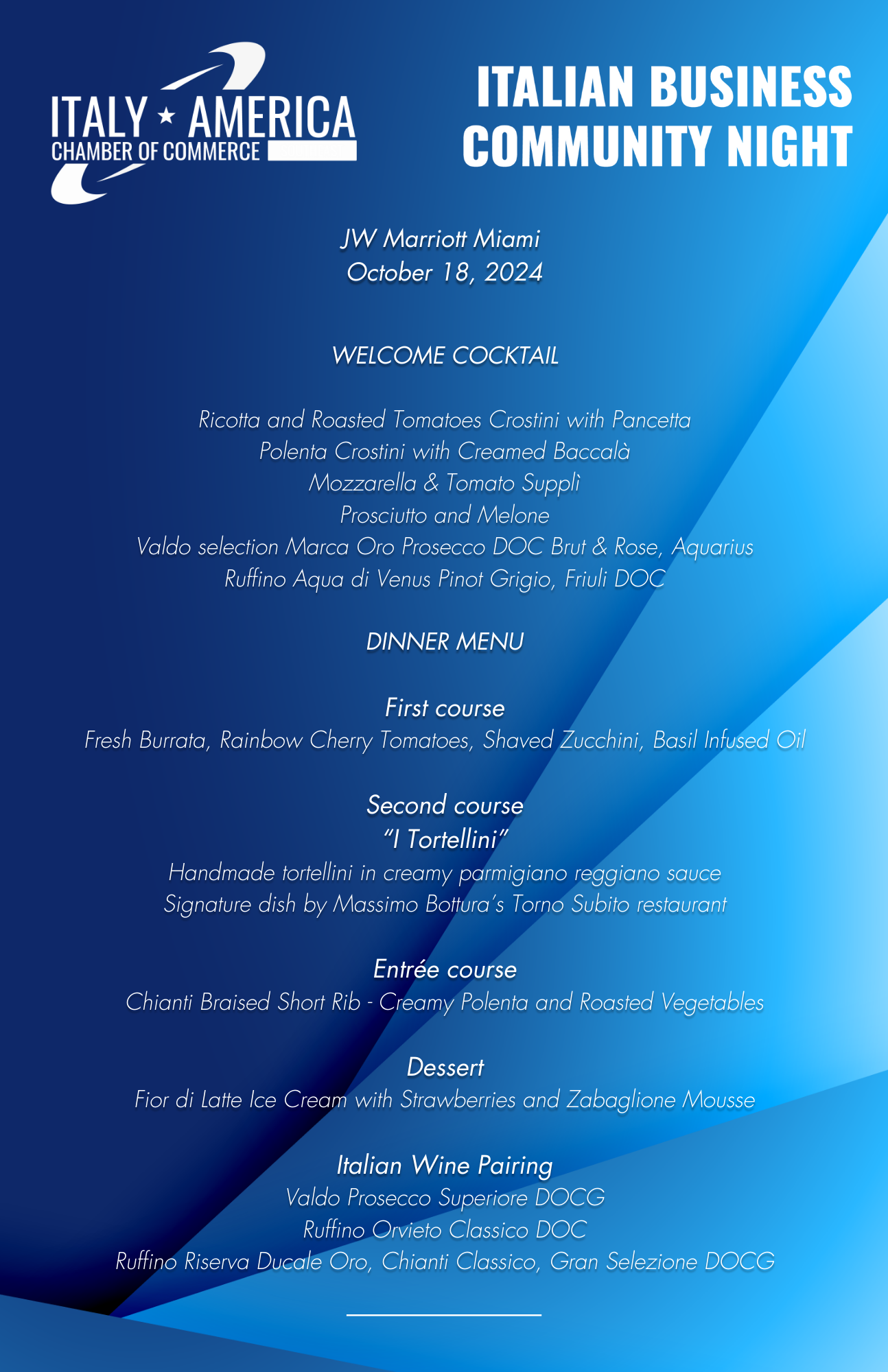
Welcome Cocktail and Dinner Menu

The Italian Business Community Night will be held on the picturesque pool deck, situated on a terrace in the heart of Brickell, surrounded by the unparalleled views of the city lights.

Valdo USA

Valdo is a family-owned winery located in Valdobbiadene, a UNESCO World Heritage Site. Founded in 1926, Valdo is one of the most historic and trusted brands specialized in premium Prosecco and Italian sparkling wines, blending tradition with innovation. Passion for quality and strong commitment to sustainability are the key company values driving Valdo into the future.

Ruffino 1877

Ruffino is a multifaceted business centered on the production of quality Italian wines, whose mission incorporates the key requirements of contemporary agriculture. An established producer of top Tuscan wines with over a hundred years of history, which continues to provide the basis of its popularity, more recently the company extended its vision beyond these historic Tuscan estates with wines that achieve their highest expression in Veneto, whose terrain is especially suited to the production of quality Prosecco and white wines.

Acqua Panna & S. Pellegrino

Acqua Panna is a water that’s worth savoring. Crafted by nature for an unmistakable taste, filtered drop-by-drop through the sun drenched hills of Tuscany since 1654. The balanced and unmistakable taste of Acqua Panna makes it the finest water to savor at the best tables. Acqua Panna is Tuscany captured in a bottle.

“Tastefully Italian” is how San Pellegrino describes itself. Two words to introduce a dimension full of taste: of course, the unmistakable taste of S.Pellegrino, with its gentle bubbles and fine mineral balance. But from a wider perspective, it’s the idea of living life in good taste, seen as the Italian sense of style and quality.

Online Sales into the U.S. – Are Businesses Virtually Tax-Free?

By Mowery & Schoenfeld, LLC

Michael Szewc, Director of State & Local Tax Services and Diksha Bhatt, International Tax Manager

Considering the global nature of businesses and the large and diversified U.S. market, foreign businesses have successfully penetrated the U.S. market with their goods and services. A fair amount of these successful foreign businesses sell to U.S. customers through digital means without any physical location or presence in the U.S.   

Most U.S. income tax treaties with other countries provide U.S. federal tax exemption for a foreign business’ U.S. profits as long as the foreign entity does not have a U.S. permanent establishment (i.e., a U.S. taxable presence). Depending on the relevant state where customers are located, the particular state may or may not follow the federal income tax rules.  

This article briefly discusses certain U.S. federal and state tax rules relevant to inbound sales of goods and services in the U.S.  

U.S. Permanent Establishment   

In simple terms, a U.S. permanent establishment (“PE”) generally refers to a fixed place of business through which a foreign entity carries on business in the U.S.  Permanency of the U.S. business location and its discretionary availability to the foreign business is primary. Other aspects, such as ownership of the place or type of place, may not necessarily be always relevant.   

Relevance of Treaty Permanent Establishment Rules for State Income Tax and State Sales Tax  

Some U.S. states may honor the provisions of tax treaties and preclude foreign entities from income tax when such entities do not have a permanent establishment in the U.S. However, these protections do not extend to other measures of tax. A business only needs a sufficient connection (“nexus”) with a state or local jurisdiction to be subject to sales and use tax and often other state-imposed taxes. 

For foreign and domestic businesses, sales tax nexus was historically triggered if a business established physical presence in a state. Examples of physical presence include offices, inventory, salespeople, or employees. The U.S. Supreme Court abolished this decades-long requirement in its 2018 decision, South Dakota v. Wayfair, Inc. As a result of the ruling, states could impose sales and use tax on remote sellers based solely on their economic presence, prompting states with a sales tax regime to enact thresholds based on total sales or number of transactions. 

Although these thresholds vary by state, the most widely adopted has been $100,000 in sales or 200 separate transactions within a twelve-month period. Foreign businesses approaching or exceeding this level of economic activity should be aware of the potential requirements to register, collect, and remit sales and use taxes. 

Even in a post-Wayfair landscape, foreign businesses should consider the ramifications of having a physical presence in the U.S.  

State Tax Implications: When a Foreign Business Serves the U.S. Market Using U.S. Servers or Other Computer Equipment in the U.S. 

A server is typically used to host websites. A foreign entity may have its own website through which it sells goods or services in the U.S. By itself, a website is not considered tangible property and usually does not result in a PE for the foreign entity in the U.S.  In many cases, the server on which the website is hosted, even though located in the U.S., may be rented by the foreign entity from a third-party internet service provider.  In this case, usually, such a server may not constitute a PE of the foreign entity because it may not be considered to be at the disposal of the foreign entity. In other words, in the absence of controlling rights over the server, the server may not constitute a PE in the U.S. for the foreign entity.  

On the other hand, a server owned or rented explicitly by the foreign entity exclusively for its own use to host its website may constitute a PE of such entity in the U.S. Taxpayers also need to consider other aspects for determining whether there is a U.S. PE through a server, including: (1) permanency of the server at the location, i.e., the duration of time for which that server is located in the U.S. so as to be considered a fixed place PE in the U.S.; (2) whether the taxpayer’s main business activities can be considered to be carried on in the U.S. through that server or whether the server is only utilized to carry on ancillary business activities so as not to constitute a PE.  

From a state perspective, a common misconception is that sales and use tax is only applicable to tangible personal property. Many states have broadened their tax bases to include digital products and services. In particular, the taxation of software-as-a-service has expanded to over 20 states. Foreign businesses may need to collect sales tax from customers in the U.S., regardless of the server’s location where the software is housed. 

State Tax Implications: Where a Foreign Business Has a U.S. Agent or Warehouse   

Foreign entities making online sales in the U.S. may have a warehouse in the U.S. to ship the actual goods to the customers.  These entities may also have agents in the U.S. to support their business operations.  

Generally, a warehouse utilized only to store and display goods does not constitute a U.S. PE. Agents with the authority to habitually conclude contracts or habitually play the principal role leading to the conclusion of contracts may constitute a U.S. PE. For foreign entities selling online directly to customers, the role of agents, if any, may not be substantial to create a U.S. PE.  

However, when it comes to sales tax considerations, the results may be very different. Maintaining inventory with a third-party logistics provider can create nexus, and therefore collection and remittance responsibilities, long before the economic thresholds are met. Some of these services (e.g., Fulfilled by Amazon) can even create these requirements in numerous states as property is moved and stored across the country. 

Other Sales and Use Tax Considerations  

Drop shipping can pose unique burdens on foreign businesses making remote sales into the U.S. The transaction between a wholesaler and distributor should qualify under the resale exemption; however, exempt sales are only exempt if the proper documentation is presented. If a retailer isn’t registered in the ship to state, they may not be able to issue a valid resale certificate and will be subject to sales tax themselves.  Retailers generally can’t pass along the tax charged by the supplier unless they are registered to collect that state’s tax. 

Digital Services Taxes  

The lack of taxing rights around online businesses has prompted several countries to introduce taxes on digital services and/or goods. These taxes are commonly referred to as Digital Services Taxes (“DSTs”). Each country may have its defined set of online activities on which a DST is levied. 

While the U.S. does not have any DSTs at a federal level, certain U.S. states have introduced proposals to levy these unique taxes. The constitutionality of these state taxes is currently under dispute, but it is important for taxpayers to be on the lookout for future changes. 

Inbound Businesses Need to Proactively Evaluate Their Tax Obligations  

In summary, at a state level, foreign businesses with no U.S. presence may consider themselves beyond the legal jurisdiction of state and local taxing authorities. However, foreign businesses may be subject to sales and use taxes in various U.S. states, and failure to register, collect, and remit sales tax may have long-term consequences for the business. The liability for sales and use taxes can transfer to a successor entity or individual, which may limit the desirability of the business, especially to U.S.-based investors. Therefore, inbound businesses should proactively evaluate their state and local sales and use tax obligations. 

Connect with Our M&S International & SALT Teams  

Our dedicated state tax and international tax service line experts can assist with customized and comprehensive assessments and efficient solutions for your businesses. We assist with the analysis stage and support you with related U.S. federal and state compliance.   

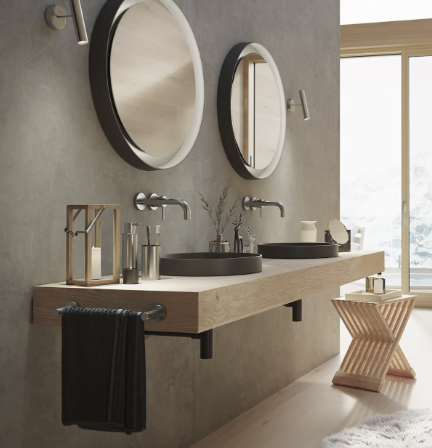
“U.S BATHROOM FIXTURES DISTRIBUTORS MISSION IN ITALY”

The Italy-America Chamber of Commerce Southeast in collaboration with Piemonte Agency (https://www.centroestero.org/en/) the official trade agency of Piedmont region is organizing a trade mission to the industrial district of Borgomanero (between Milan and Turin) to discover the new collections of famous Italian bathroom fixtures manufacturers. The mission is a unique opportunity for international buyers to get in touch and doing business with a selection of Italian top-class suppliers showing their craftsmanship and high-quality products like faucets, taps, fittings, shower heads, shower arms, showers columns etcduring a two-day program of B2B meetings and visits to companies’ factories .

The IACCSE will offer this opportunity to five selected US buyers, including distributors and interior designers. 

The organizer will offer an ALL-INCLUSIVE BUYERS’ HOSPITALITY PROGRAM that includes:   

  • Round-trip flight from a US airport to Milano Malpensa airport 
  • Private airport/hotel transportation 
  • Accommodation for 3-nights in the beautiful town of Arona on the shores of scenic Lake Maggiore 

If you are an importer/distributor/retailer of plumbing supplies, we are inviting you to consider this great opportunity to meet new Italian producers and explore potential partnerships for the future. 

Should you be interested in participating, please contact us at trade@iacc-miami.com no later than Monday August 26th 2024. 

Agreement with Cruise Ship Interiors Americas

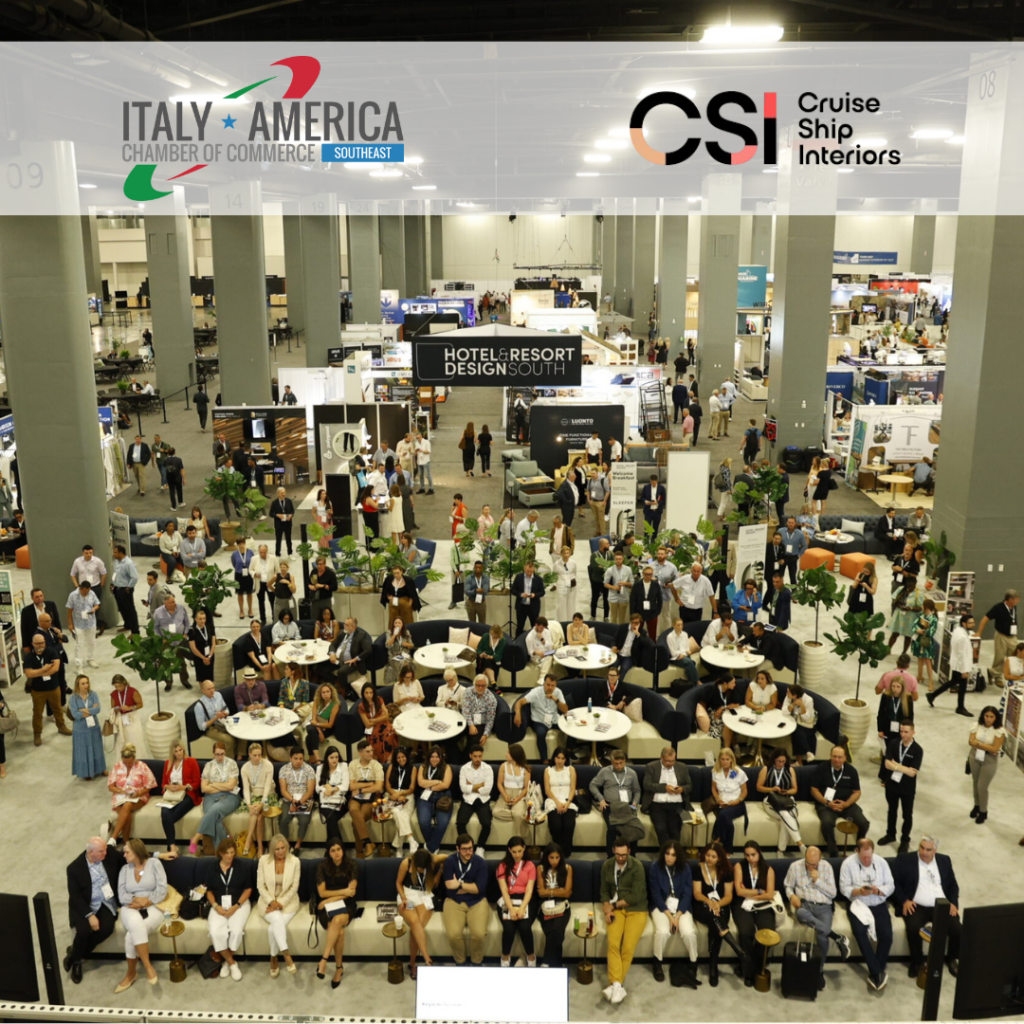
Cruise Ship Interiors Design Expo Americas (CSI) is the world’s only exhibition and conference exclusively dedicated to connecting the buyers and suppliers of the cruise design industry. Taking place annually at the Miami Beach Convention Center, the next edition is scheduled for June 3-4, 2025. This prestigious event will feature over 250 exhibitors specializing in furniture and furnishing materials for the cruise ship market.

CSI attracts a diverse audience of 3000 professionals, including interior designersarchitects specializing in the naval sector, and interior design managers from major international cruise lines. Leading cruise brands such as Carnival Cruise LineRoyal CaribbeanVirgin Voyages, and MSC Cruises will be present, making it an unmissable event for those in the industry.

CSI also offers attendees the opportunity to discover the latest products and services from. The expertly curated Conference & Workshop Program will cover key topics such as upcoming trends and sustainability, featuring insights from industry leaders.

Thanks to an agreement signed with Cruise Ship Interiors, the Italy-America Chamber of Commerce Southeast will organize an Italian pavilion at the 2025 edition. This pavilion will include a pre-assembled stand and a series of networking activitiesconferences, and seminars, providing valuable visibility to the participating Italian companies. The participation cost for a 10×10 feet stand starts at $8400. For more information and to register, please contact trade@iacc-miami.com and address your inquiries to Francesca Lodi.

Don’t miss this extraordinary opportunity to be part of the most important event in the cruise design industry. Join us at the Miami Beach Convention Center on June 3-4, 2025, for an event that promises to be both informative and inspiring.

Elevate Your Brand at the Italian Business Community Night (October 18, 2024)

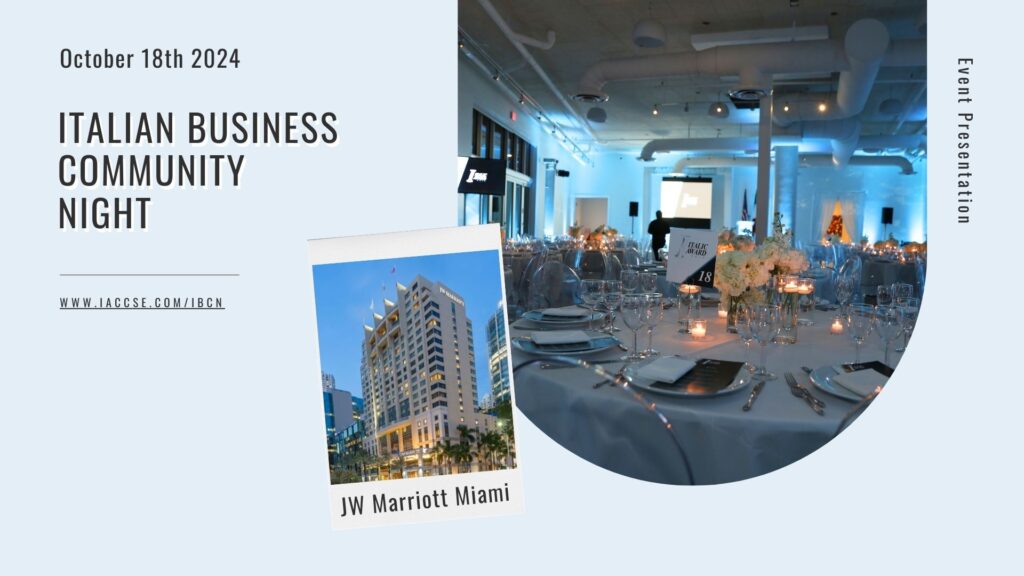
Join us on October 18th, 2024, from 6 pm to 11 pm, for a fantastic night that will include a networking cocktail, live music, keynote speakers’ presentations, a delightful 4-course dinner presenting selected Italian food & wines, and an afterparty at the JW Marriott Miami, in the vibrant neighborhood of Brickell.

During the night the Chamber will recognize with the Pillar Award, its longstanding members.

In particular:

20 years of membership

  • Beghelli USA
  • Chamber of Commerce of Genova (Italy)
  • Robert Allen Law

25 years of membership

  • Prime Line Distributors

Over 200 business leaders are expected to join this year’s event.

Keynote speakers will talk about the rise of Miami as a sport capital of the world and how big sporting events, like the FIFA World Cup or the recurring Miami Open and Miami Grand Prix, will transform the city landscape and economy and what the opportunities are for Italian companies in this context.

This event is also an excellent opportunity for your company to have a wider exposure by becoming a sponsor. 

Sponsors receive exclusive benefits, such as 1 table for 8 guests, an exhibition space for marketing material and high-visibility recognition before and during the event, including a company presentation from the stage.

To download the official presentation of the event, click here: IBCN_presentation

To become a sponsor, download the sponsorship package here: IBCN_Sponsors_Package

Single tickets will be available starting from the end of August on Eventbrite

Priority will be given to event sponsors and their guests.

We look forward to seeing you on October 18th at the JW Marriott Miami in Brickell!

New Overtime Exemption Rule: Evaluating Your Options for Compliance

By ADP

The U.S. Department of Labor (DOL) recently released a final rule that will increase the minimum salary required for administrative, professional and executive employees to be exempt from overtime. The final rule increases the minimum salary requirements first on July 1, 2024 and then again on January 1, 2025. With the first change less than two months away, now is the time to evaluate your options. Here are some guidelines for doing so.

Overview of changes

Effective July 1, 2024, the minimum salary for the administrative, professional and executive exemptions will increase from $684 per week to $844 per week (equivalent to $43,888 per year). 

Effective January 1, 2025, the minimum salary required for these exemptions will increase from $844 per week to $1,128 per week (equivalent to $58,656 per year).

Employers continue to be permitted to use non discretionary bonuses, incentive payments and commissions to satisfy up to 10 percent of the minimum salary requirement for the administrative, professional and executive exemptions, as long as these forms of compensation are paid at least annually.

Note:  Employees must also satisfy certain duties tests to be classified as exempt from overtime. The final rule didn’t change these duties tests.

Two options

If your exempt administrative, professional and executive employees’ salaries fall below the new federal salary requirement, you will generally either have to:

  • Raise their salaries to the new requirement (if you elect this option, review employees’ job duties to ensure they continue to qualify for the applicable exemption); or
  • Reclassify the affected employees as non-exempt and pay them overtime whenever they work more than 40 hours in a workweek.

Continue to read at the following link: www.iaccse.com/wp-admin/post.php?post=18179&action=edit

CD Italia Launches M&M Italian Design: Merging Italian Elegance with American Craftsmanship

By CD Italia

CD ITALIA is pleased to announce the launch of a significant economic development project specifically related to the Italian Design sector in the Unites States. With the recent establishment of M&M Italian Design, Moreno Modolo, CEO of CD Italia and M&M Italian Design, will merge Italian elegance with American craftsmanship, revolutionizing the furniture landscape. By partnering with top American manufacturers, M&M will offer premium Italian-design pieces, locally crafted in the U.S. – Modolo’s vision will ensure luxury accessibility, with a curated selection combining Italian sophistication and American reliability.

Through a multi-channel distribution network, involving a range of industry operators and ambassadors of Italian design, as well as a new network of franchise distributors, M&M will bring Italian Design to the American Design Society, significantly reducing logistics times and costs from Italy to the USA. The project aims to become an authentic Italian version of the acclaimed French model Roche Bobois.

With almost thirty years of experience in the Italian furniture industry, we are proud to join forces with the productive expertise of American artisans in what we like to call “A strongly Italian-inspired project” made in the USA.

Moreno Modolo, CEO of CD ITALIA since 2015, has been operating in the United States since the year 2000, when he began his professional career within the Italian design production sector. After a rapid career rise, he concluded his executive journey at the helm of Club House Italia with the Fendi and Kenzo Maison brands. From there, he started his entrepreneurial journey, first in Italy with Corte Diamante, a strategic consulting and internationalization company in the furniture sector, and then with CD Italia in Miami. Today, CD Italia represents famous Italian and European furniture brands in the United States, for which Moreno Modolo has opened distribution with over 500 partners across the USA.”

Ospitalità Italiana Certification

The Italy-America Chamber of Commerce Southeast is glad to announce that the process for the prestigious certification “Ospitalità Italiana – Ristoranti Italiani nel Mondo” will restart in summer 2024.

This certification serves as a seal of quality for Italian restaurants worldwide. Created by IS.NA.R.T. (Istituto Nazionale Ricerche Turistiche) and promoted by Unioncamere (the official organizazion of the Chambers of Commerce in Italy), the certification recognizes authentic Italian restaurants, pizza restaurants, and gelato shops globally.

The IACCSE will be responsible for certifying local restaurants in the Southeastern United States eligible for the “Marchio Ospitalità Italiana.”

Of course, priority will be given to restaurants members of our Chamber.

The “Marchio Ospitalità Italiana” aims to:

  • Promote Italian Excellence: Develop and promote the traditions of Italian food products and enhance the culture of Italian food and wine.
  • Ensure Quality: Improve the image of Italian restaurants abroad that guarantee respect of the quality standards of Italian hospitality.
  • Build Global Network: Create an international network for the realization of promotional events showcasing Italian excellence.

Important Notice for Southeast USA Restaurants Previously Evaluated:

All restaurants certified between 2011 and 2017 in the Southeast USA must reapply for certification, as previous certifications have expired.

If you are eager to display the golden plaque with the “Q” sign outside your restaurantreach out to us at membership@iacc-miami.com 

New Overtime Exemption Rule: Evaluating Your Options for Compliance

By ADP

The U.S. Department of Labor (DOL) recently released a final rule that will increase the minimum salary required for administrative, professional and executive employees to be exempt from overtime. The final rule increases the minimum salary requirements first on July 1, 2024 and then again on January 1, 2025. With the first change less than two months away, now is the time to evaluate your options. Here are some guidelines for doing so.
Overview of changes

Effective July 1, 2024, the minimum salary for the administrative, professional and executive exemptions will increase from $684 per week to $844 per week (equivalent to $43,888 per year). 

Effective January 1, 2025, the minimum salary required for these exemptions will increase from $844 per week to $1,128 per week (equivalent to $58,656 per year).

Employers continue to be permitted to use non discretionary bonuses, incentive payments and commissions to satisfy up to 10 percent of the minimum salary requirement for the administrative, professional and executive exemptions, as long as these forms of compensation are paid at least annually.

Note:  Employees must also satisfy certain duties tests to be classified as exempt from overtime. The final rule didn’t change these duties tests.

Two options

If your exempt administrative, professional and executive employees’ salaries fall below the new federal salary requirement, you will generally either have to:

  • Raise their salaries to the new requirement (if you elect this option, review employees’ job duties to ensure they continue to qualify for the applicable exemption); or
  • Reclassify the affected employees as non-exempt and pay them overtime whenever they work more than 40 hours in a workweek.

Below we cover these options in detail.

Raising salaries

The option of raising salaries may be more cost-effective if the employee’s current salary is already close to the new minimum and/or they regularly work more than 40 hours per week.

If you elect to raise an exempt employee’s salary to meet the new minimum, review their job duties to ensure they continue to qualify for an exemption. You can use our calculator to estimate the costs of this option by simply entering your employees’ current salaries.

For many employers, raising employees’ salaries to the new minimum required salary may create wage compression (a situation that occurs when employees have similar salaries despite different qualifications or experience). Therefore, if you substantially increase some employees’ pay, other employees may have questions about why their pay isn’t increasing.

You should review the compensation of employees paid below the new threshold and may also want to consider, from an employee relations and financial perspective, raising the salary of other employees (particularly those paid slightly above the new required minimum) and communicate any such changes accordingly.

Reclassifying employees as non-exempt

If exempt employees don’t meet the new salary requirement, you can reclassify them as non-exempt and pay them overtime whenever they work more than 40 hours in a workweek. This option may be cost-effective if employees’ current salaries are far below the new requirement and/or they rarely work overtime.

To help determine whether it will cost less to raise employees’ salaries or reclassify the employees as non-exempt:

  • Get an accurate picture of the hours exempt employees typically work per week. Factor in peak periods for your business and all the time that is considered “hours worked.” Under federal law, employers must pay non-exempt employees not only for time actually spent working, but also for certain nonproductive time. For example, under certain circumstances, travel time and time spent performing preliminary or postliminary activities can be deemed compensable work time for non-exempt employees.
  • Use our calculator to help estimate the costs of raising salaries versus reclassifying employees.

If reclassifying employees makes the most sense for your business, you can simply convert their salary to an hourly wage (divide their weekly salary by 40 hours) and pay them overtime whenever they work more than 40 hours in a workweek. However, if these employees regularly work more than 40 hours per week and you want to keep your compensation costs the same, then you would need to account for the overtime premium when you reclassify them as non-exempt.

To take this cost-neutral approach, you can use this simple formula:

Weekly Salary

__________________________

[40 hours + (Overtime Hours Worked Per Week x 1.5)]

Here’s an example:

An exempt employee’s current salary is $770 per week, the employee regularly works 50 hours per week, and you want to convert this employee to an hourly employee but keep your costs the same. You would calculate the hourly wage as follows:

$770 Weekly Salary

______________________ = $14 hourly rate

[40 hours + (10 overtime hours x 1.5)]

Note:  Employers have the option of paying non-exempt employees on a salary basis as long as the employee is paid at least the minimum wage for all hours worked and overtime when they work over 40 hours in a workweek. If you pay non-exempt employees on a salary basis, you must ensure that all time worked is accounted for and that the employee is paid overtime when due.

Options for highly compensated employees

There is also a special exemption for “highly compensated employees” who have a total annual compensation of a specified amount and regularly perform at least one of the exempt duties or responsibilities of an exempt executive, administrative or professional employee.

Effective July 1, 2024, the minimum total compensation requirement for the exemption will increase to $132,964 per year, including at least $844 per week that must be paid on a salary or fee basis.

If your exempt highly compensated employees’ weekly salary is less than $844 as of July 1, 2024, you generally must either raise their salaries to $844 per week or reclassify them as non-exempt. If your exempt highly compensated employees’ weekly salary is at least $844 but their total annual compensation is less than $132,964 per year, you generally have three options:

  • Raise their total annual compensation to $132,964 per year (if you elect this option, review employees’ job duties to ensure they continue to qualify for the highly compensated employee exemption);
  • Reclassify the affected employees as non-exempt and pay them overtime whenever they work more than 40 hours in a workweek; or
  • Apply the full duties tests of the administrative, professional or executive exemptions. If the employee satisfies the full duties test of one of these exemptions, you can consider reclassifying them as exempt under one of these exemptions and keep your compensation costs the same by meeting the new weekly salary requirement for those exemptions, rather than raising their total annual compensation to $132,964 per year. If the employee cannot completely satisfy the full administrative, professional, or executive duties test, then select one of the first two options.

Note: Effective January 1, 2025, the minimum total compensation requirement for the exemption for highly compensated employees will increase to $151,164 per year, including at least $1,128 per week that must paid on a salary or fee basis.

Conclusion

If you have one or more exempt employees who earn a weekly salary of less than the new minimum requirement, you should evaluate your options for complying with the final rule. Keep in mind the final rule includes a mechanism to automatically update the salary and total compensation thresholds every three years. 

The final rule will likely face legal challenges. We will be monitoring the status of the rule closely and updating our FLSA and Overtime Exemption Rule Guide as any developments unfold.

The Best of Italian Design – Art Week Edition | December 4,5,6 2024


WHEN  December 4,5,6 – 2024


WHERE  Istituto Marangoni Miami (3704 NE 2nd Ave, Miami, FL 33137)


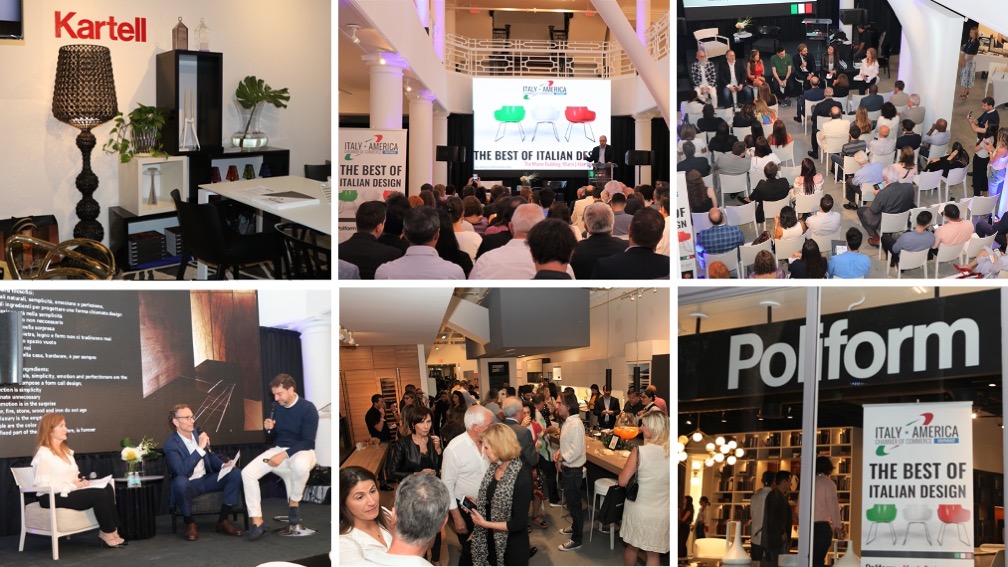
The Best of Italian Design is a unique event dedicated to celebrating and displaying Italian interior design brands and Made in Italy high-end products.

The event is created for those Italian interior design companies interested in meeting with 200+ industry professionals (architects, interior designers, real estate developers) and 1000+ design lovers.

This year, the 5th edition of our signature event, “The Best of Italian Design,” will take place in the heart of the Miami Design District during Art Week Miami, which hosts over 20 international art fairs (including Art Basel and Art Miami), more than 1,200 exhibiting galleries, and tens of thousands of art and interior design lovers from all around the world: a unique opportunity to promote the Italian Design industry.

Within this context, the Italy-America Chamber of Commerce will present a 3-day event, including seminars, B2B meetings, workshops, and networking cocktails.

This is a unique opportunity to showcase your brand in one of the most important markets in the world for Italian interior design and benefit from the synergies between the Chamber, the Italian Trade Agency, the Consulate General of Italy, Instituto Marangoni Miami, and Design Industry Associations in South Florida.

To learn more about exhibiting opportunities, please click the button below:

Watch here the video of the 2023 edition of “The Best of Italian Design” in the Miami Design District

THE EVENT AT A GLANCE

The 5th edition of The Best of Italian Design includes:


EVENT PROGRAM

4-6 December 2024, every day:

4:00pm-6:00pm | NETWORKING IN THE EXPO AREA including:

  • Business meetings
  • Introduction between exhibitors and design professionals
  • Promotion opportunities to an audience of design lovers

Click here to view the full exhibitors’ directory

6:00pm-7:00pm | TALKS including in the 3 days:

  • Distinguished Keynote Speakers
  • Open discussion with renowned architects, interior designers, and real estate developers
  • Furniture Dealers Round-Table

Click here to view the Talks Program

7:00pm-9:00pm | NETWORKING COCKTAIL including:

  • Second Round of Business Meetings
  • Drinks and bites

EXHIBITORS

COCKTAIL SPONSOR

PARTNERS

TECHNICAL SERVICES


Watch here the video testimonial of our past exhibitors:


FOR FURTHER INFORMATION CONTACT  MARKETING@IACC-MIAMI.COM

EXHIBITING OPPORTUNITIES

IF YOU ARE AN ITALIAN COMPANY INTERESTED IN TAKING PART IN THE BEST OF ITALIAN DESIGN BASEL EDITION,
CHECK OUT THE EXHIBITORS’ PACKAGE TO DISCOVER
THE DIFFERENT EXHIBITING LEVELS AVAILABLE

FOR FURTHER INFORMATION ON THE EXHIBITING OPPORTUNITIES CONTACT
ALESSIA MARCENARO, DEPUTY EXECUTIVE DIRECTOR  MARKETING@IACC-MIAMI.COM


THE BEST OF ITALIAN DESIGN

Miami, 4-6 Dicembre 2024

Presentazione:

Nel 2023 l’export italiano verso gli USA ha registrato una forte crescita (+5,6%) rispetto al 2022, con un valore 72,9 miliardi di dollari, il miglior risultato di sempre.

In particolare, nel 2023, le esportazioni italiane di arredo ed edilizia negli Stati Uniti hanno raggiunto la cifra di 3,57 miliardi di dollari.

Per molti brand d’arredo Miami risulta ormai essere il primo mercato, superando sia New York che Los Angeles. Il mercato del real estate dell’area metropolitana di Miami è tra i più dinamici ed in crescita a livello mondiale. Il Miami Design District è il quartiere con la più alta concentrazione di showroom di arredo di alta gamma in tutti gli Stati Uniti. Miami rappresenta inoltre un punto di riferimento in ambito distributivo e logistico per l’America Latina.

È proprio per dare visibilità alle eccellenze del design italiano sull’importante piazza di Miami che la Italy-America Chamber of Commerce Southeast organizzerà, il prossimo 4-6 dicembre nel cuore del Miami Design District, la quinta ed esclusiva edizione Art Week dell’evento “The Best of Italian Design”.

Circa 200 architetti, rivenditori e interior designer americani verranno invitati per una giornata di incontri B2B, seminari e networking con le imprese italiane.

Durante l’evento sono in programma discussioni stimolanti condotte da influenti protagonisti dell’industria dell’architettura e del design. Inoltre, i partecipanti avranno l’opportunità di partecipare a incontri B2B e ad una serata diffusa di networking organizzata in diversi showroom italiani all’interno del Miami Design District.

Il programma della quinta edizione del The Best of Italian Design si articolerà come segue:

*   Sessione B2B: apertura area expo e incontri tra espositori e visitatori professionali

*  Seminari: incontri sul settore arredo design nel Sud della Florida

*  Networking Cocktail: una serata diffusa tra gli showroom italiani di design del Miami Design District per continuare gli incontri tra operatori in compagnia di cocktail a base di liquori italiani.

Per maggiori informazioni sull’evento ed iscrizioni:

Le aziende italiane interessate a partecipare come espositori possono anche contattare la nostra Camera di Commercio all’indirizzo: marketing@iacc-miami.com

Ente organizzatore:

L’Italy-America Chamber of Commerce Southeast (IACCSE) con sede a Miami è una organizzazione statunitense senza scopo di lucro, ufficialmente riconosciuta dal governo italiano, che si dedica alla promozione del commercio tra gli Stati Uniti e l’Italia. Fondata nel 1991, la IACCSE fa parte di Assocamerestero, l’associazione delle Camere di Commercio Italiane all’Estero. La Camera annovera una base associativa di circa 270 imprese, di origini sia italiane che americane. Alcuni dei marchi più rappresentativi del “Made in Italy” negli USA sono tra gli associati. I settori in cui operano i soci sono i più vari, dall’arredo-casa alla ristorazione, dalla meccanica alla logistica.


Accessibility Toolbar